Trailer Lug Nut Torque Specs: Complete Guide by Stud Size and Wheel Type
Published: April 18, 2026 by Allred Trailer Service
Proper lug nut torque is one of the most important and most overlooked maintenance tasks on any trailer. Under-tightened lug nuts back off on the highway. Over-torqued studs stretch, crack, and eventually fail. Either way, the result is a rim separation and that is a serious safety hazard for everyone on the road.
This page lists final torque specs for lug nuts by rim size, stud size, and nut type, pulled directly from Dexter axle service documentation. These are the numbers used by professional technicians.
Need axle parts for your trailer?
https://brakes4trailers.com/allred
Lug Nut Torque by Rim and Stud Size
These final torque values apply to Dexter light and medium duty axles with SAE Grade 8 wheel studs.
| Wheel Size | Stud Size | Final Torque |
|---|---|---|
| 12"-13", 440/545 BC | 1/2"-20 | 60-75 ft-lbs |
| 14"-16.5", 545/655 BC | 1/2"-20 | 100-120 ft-lbs |
| 16"-16.5", 865 BC | 9/16"-18 | 140-170 ft-lbs |
| 16.5" x 9.75", 865 BC | 5/8"-18 | 175-225 ft-lbs |
| 17.5" Hub Pilot, clamp ring (greased threads) | 5/8"-18 | 190-210 ft-lbs |
| 17.5" Hub Pilot, flange nut | 5/8"-18 | 275-325 ft-lbs |
| 17.5" Hub Pilot, swivel flange nut | 5/8"-18 | 150-175 ft-lbs |
Wheel Nut Torque by Nut Type (Heavy Duty Dexter Axles)
For trailers with larger axles, clamp ring setups, or dual setups, the final figure is determined by nut type rather than wheel diameter alone.
| Nut Type | Application | Final Torque |
|---|---|---|
| 5/8"-18 90-degree cone nut | Clamp ring, greased threads | 190-210 ft-lbs |
| 3/4"-10 hex nut | Demountable rim clamp | 210-260 ft-lbs |
| 3/4"-16 spherical nut | Single wheel / inner dual | 450-500 ft-lbs |
| 1-1/8"-16 spherical nut | Outer dual | 450-500 ft-lbs |
| 5/8"-18 non-swiveling flange nut | Standard wheels | 275-325 ft-lbs |
| 5/8"-18 swiveling flange nut (Torq-N-Go) | Standard wheels | 150-175 ft-lbs |
| M22-1.5 swiveling flange nut | Standard wheels | 450-500 ft-lbs |
When to Check Lug Nuts
- Before first road use after any wheel removal
- After the first 10 miles following a wheel removal
- Again at 25 miles
- Again at 50 miles
- Periodically thereafter as part of routine pre-trip inspection
New wheels and recently serviced hubs seat and settle under load. Re-torquing at the intervals above catches fasteners that have relaxed after initial use. Skipping the re-torque checks is one of the most common causes of loose wheels on the road.
Important Notes on Lug Nut Torque
Cone angle matters. Use only lug nuts matched to the cone angle of your specific rim typically 60 or 90 degrees. Using the wrong cone angle concentrates clamping load on the wrong part of the nut seat and leads to stud damage and wheel loosening over time.
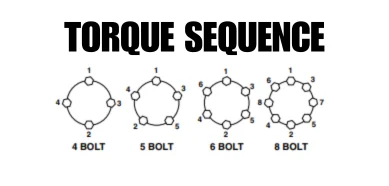
Tighten in a star pattern. Always tighten lug nuts in the proper cross sequence, not in a circle around the hub. This ensures even clamping force across the wheel flange and prevents the rim from cocking on the hub during installation.
Torq-N-Go swiveling nuts are different. Dexter's Torq-N-Go swiveling wheel nut generates significantly more clamp load than a standard nut at the same wrench setting. Do not apply standard torque specs to Torq-N-Go nuts. Use the 150-175 ft-lbs range listed above and verify that your rims are rated to handle the increased clamp load before use.
Do not exceed stud limits. The maximum torque that can be safely applied to Dexter Grade 8 studs is 120 ft-lbs for 1/2"-20, 170 ft-lbs for 9/16"-18, and 325 ft-lbs for 5/8"-18. Exceeding these limits damages studs and leads to eventual fractures and dangerous wheel separation.
Use a torque wrench. Impact guns do not provide controlled or measurable clamping force. A calibrated torque wrench is the only reliable way to confirm that lug nuts have been tightened to spec.
Frequently Asked Questions
What is the torque spec for trailer lug nuts?
It depends on wheel size and stud size. For most light duty trailers with 12"-13" wheels and 1/2"-20 studs, the spec is 60-75 ft-lbs. Larger rims with 1/2"-20 studs on 14"-16.5" wheels call for 100-120 ft-lbs. Trailers with 9/16"-18 studs require 140-170 ft-lbs, and 5/8"-18 applications range from 150-325 ft-lbs depending on nut type and wheel configuration.
Can I use an impact gun to torque lug nuts?
No. Impact guns do not deliver controlled tightening. Use a torque wrench set to the correct value for your stud size and nut type.
How often should I re-torque lug nuts?
Re-torque before first use after any rim removal, then at 10 miles, 25 miles, and 50 miles. Check periodically after that as part of routine maintenance.
What happens if lug nuts are too loose?
Loose lug nuts allow the rim to shift on the hub, which elongates the stud holes, fatigues the studs, and eventually causes rim separation. This is a leading cause of wheel-off incidents on public roads.
What happens if lug nuts are over-torqued?
Over-torquing stretches and fatigues studs. A stud that has been over-tightened is compromised and should be replaced. Damaged studs can fail under load without warning.
Does lug nut torque change for aluminum wheels?
The torque spec is determined by stud size and nut type regardless of rim material. However, aluminum rims require more frequent re-torque checks because aluminum compresses and seats more than steel under load. Shorten re-torque intervals when running aluminum rims.
Need axle parts for your trailer?
https://brakes4trailers.com/allred
Want to start your own trailer service?
https://allredtrailerservice.com/shop?tab=guides
If you have questions about your lug hardware, need a spec check, or are due for a full inspection, call Allred Trailer Service at (916) 251-9731 or visit allredtrailerservice.com. We work throughout Northern California.